
The History of Word Search Puzzles
Discover the history of word search puzzles, from their 1968 origins to their popularity in classrooms, senior centers, puzzle books, and homes today.
6/22/20264 min read
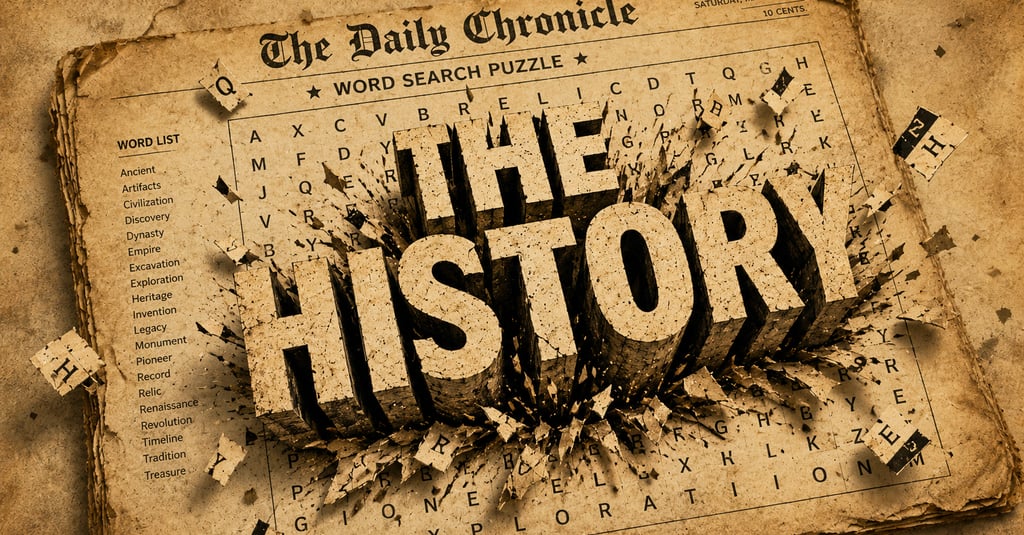
Word search puzzles feel like they have been around forever. They show up in puzzle books, newspapers, classrooms, senior centers, waiting rooms, and activity programs all over the world.
But compared to other classic word games, the word search is actually a fairly modern puzzle.
While crossword puzzles became popular in newspapers in the early 1900s, the modern word search puzzle is most often traced back to the late 1960s. Since then, this simple but satisfying activity has become one of the most recognized and loved puzzle formats for adults, seniors, students, and casual puzzle fans.
What Is a Word Search Puzzle?
A word search puzzle is a grid filled with letters. Hidden inside the grid are words that players must find and circle.
Words may appear:
Horizontally
Vertically
Diagonally
Forward
Backward
Most word search puzzles also include a theme. For example, a puzzle might focus on animals, holidays, movies, history, travel, music, or a specific decade.
That themed structure is part of what makes word searches so enjoyable. Players are not just hunting random words—they are exploring a topic while exercising focus and pattern recognition.
Who Invented the Word Search Puzzle?
The modern word search puzzle is most commonly credited to Norman E. Gibat, who published a word search in the Selenby Digest on March 1, 1968, in Norman, Oklahoma. The first puzzle reportedly featured Oklahoma towns and cities.
The Selen by Digest was a small local publication distributed in places such as grocery stores. Gibat wanted to create something entertaining that readers could enjoy while waiting in line or passing time.
What started as a small local feature quickly became popular.
The First Word Search Puzzles
Gibat’s early word search puzzles were simple, but they had the same basic appeal that word searches still have today.
They were:
Easy to understand
Quick to start
Relaxing to solve
Fun for many ages
Useful as learning tools
According to several histories of the puzzle, teachers were among the first people to recognize the value of word searches. They began requesting copies to use in classrooms because the puzzles helped students practice spelling, word recognition, vocabulary, and concentration.
That educational use helped word searches spread beyond their original local audience.
Was Norman Gibat the Only Inventor?
Although Norman E. Gibat is widely credited with publishing the first modern English-language word search, the full history is a little more complicated.
Spanish puzzle creator Pedro Ocón de Oro is also associated with a similar puzzle called “Sopa de Letras,” which translates to “Soup of Letters.” Some sources note that this type of puzzle appeared in Spanish before Gibat’s 1968 publication.
Because puzzle ideas often develop in different places at different times, it is difficult to say with absolute certainty who created the first version of the word search. However, Gibat’s 1968 puzzle in Oklahoma is usually recognized as the start of the modern word search puzzle’s popularity in the United States.
Why Word Searches Became So Popular
Word searches became popular because they are simple, flexible, and satisfying.
Unlike some puzzles that require advanced knowledge or complicated rules, a word search can be enjoyed almost immediately. The player simply looks at the word list, scans the grid, and begins searching.
That easy entry point made word searches appealing to a wide audience.
They became especially popular in:
Classrooms
Newspapers
Puzzle magazines
Activity books
Senior centers
Libraries
Waiting rooms
Family homes
Another reason for their popularity is that word searches can be created around almost any topic. A puzzle can be educational, nostalgic, seasonal, funny, challenging, or relaxing depending on the theme.
Word Searches in Education
Teachers quickly discovered that word search puzzles could be more than entertainment.
They could help students practice:
Spelling
Vocabulary
Word recognition
Visual scanning
Reading confidence
Topic-based learning
For example, a teacher might use a word search about U.S. states, science terms, historical figures, animals, or holidays.
Because students often see word searches as fun instead of work, they can be a helpful way to reinforce learning without making the activity feel stressful.
Word Searches for Adults and Seniors
Over time, word searches became just as popular with adults and seniors as they were with students.
For many adults, word searches offer a calming break from busy routines. They are easy to enjoy with a cup of coffee, while traveling, before bed, or during quiet time.
For seniors, especially those who prefer screen-free activities, word searches can provide a comfortable and rewarding way to stay mentally engaged.
Large-print word search books have become especially popular because they are easier to read and reduce eye strain. This makes them a great option for older adults, assisted living communities, senior centers, and activity programs.
The Rise of Themed Word Search Books
One of the biggest reasons word search books remain popular today is the growth of themed collections.
Instead of solving random word lists, readers can choose books based on topics they already enjoy.
Popular word search themes include:
Decades and nostalgia
Classic movies
Music
Travel
Nature
Holidays
Animals
History
Hobbies
Food
Sports
Themed puzzles create a stronger connection with the solver. A 1970s-themed word search, for example, can bring back memories of favorite songs, TV shows, cars, fashion, and events from that era.
That mix of memory, entertainment, and challenge is one of the reasons themed puzzle books continue to sell well.
Word Searches in the Digital Age
Today, word searches are available in both print and digital formats.
You can find them in:
Printed puzzle books
Newspapers
Magazines
Websites
Mobile apps
Printable worksheets
Classroom resources
Even with the rise of digital puzzles, printed word search books remain popular. Many people still enjoy the simple experience of using a pencil, circling words by hand, and stepping away from screens.
For adults and seniors especially, print puzzle books offer a relaxing, familiar, and easy-to-use activity.
Why Word Searches Still Matter Today
Word searches have lasted because they are simple, enjoyable, and accessible.
They do not require special equipment, internet access, or complicated instructions. They can be solved alone or used as part of a group activity.
They also offer several benefits, including:
Screen-free entertainment
Mental stimulation
Relaxation
Focus and concentration
Vocabulary building
Pattern recognition
A sense of accomplishment
That combination makes word searches one of the most dependable puzzle formats ever created.
Final Thoughts
The history of word search puzzles shows how a simple idea can become a worldwide favorite.
From a small local publication in Oklahoma to classrooms, newspapers, senior centers, libraries, and homes around the world, word searches have earned their place as one of the most beloved puzzle activities.
They are easy to learn, fun to solve, and flexible enough to fit nearly any theme or age group.
Whether you enjoy them for relaxation, learning, nostalgia, or mental exercise, word search puzzles continue to prove that sometimes the simplest games are the ones that last the longest.
At Everstone Publishing Group, we create large-print word search and Sudoku puzzle books designed for adults and seniors who enjoy relaxing, screen-free entertainment one puzzle at a time.
Classic Sudoku
© 2026 Everstone Publishing Group