
Brain Games for Seniors: What Really Works?
Not all brain games are created equal. Learn which puzzles and activities truly help seniors stay mentally engaged, improve focus, and enjoy hours of screen-free entertainment.
6/16/20263 min read
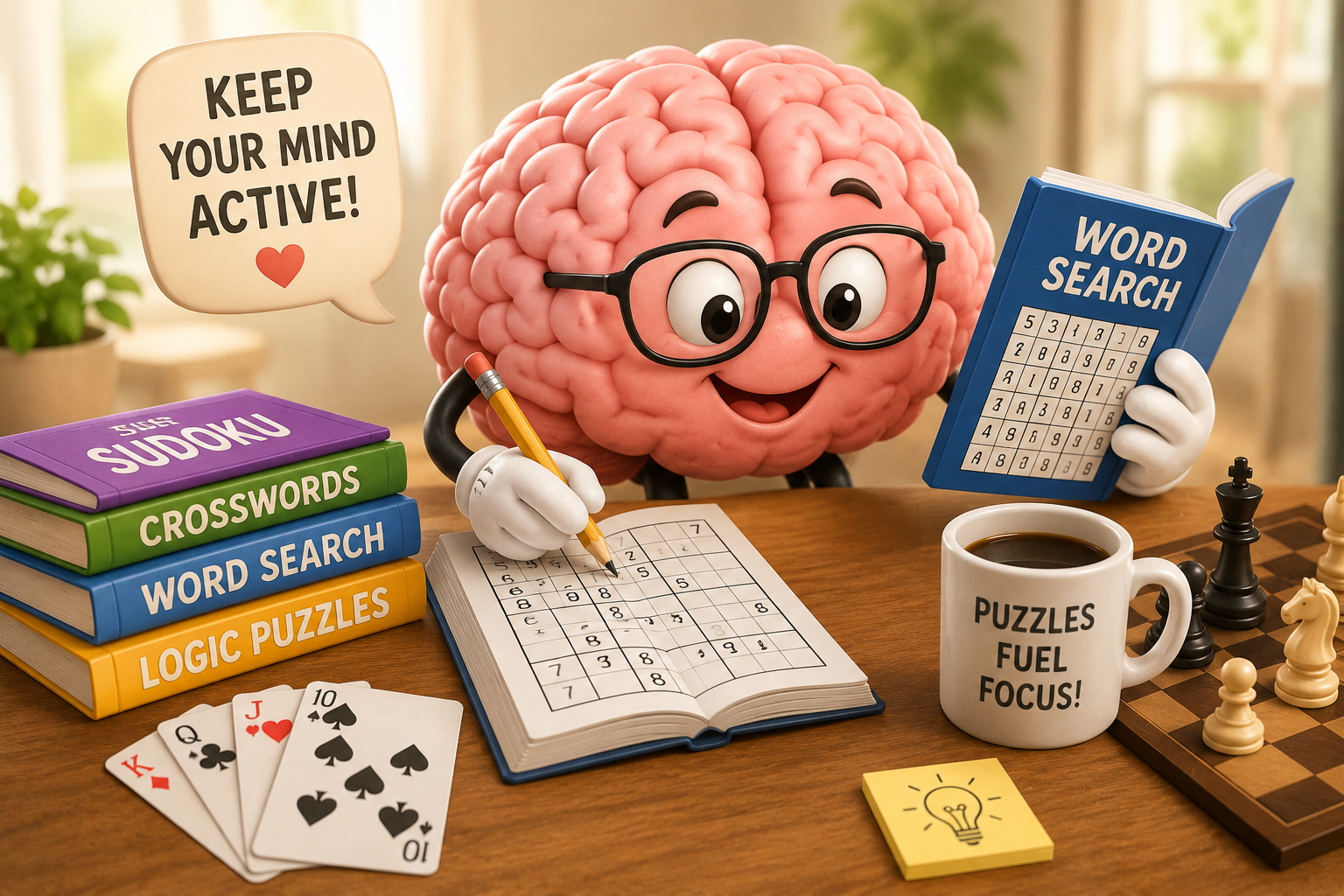
As we age, keeping our minds active becomes just as important as staying physically active. Many seniors enjoy brain games as a fun way to stay engaged, challenge themselves, and maintain mental sharpness. But with so many options available—from apps and memory games to Sudoku and Word Search puzzles—it raises an important question:
Which brain games actually work?
The good news is that research consistently shows that mentally stimulating activities can help support cognitive function, concentration, memory, and overall mental wellness. The key is finding activities that are enjoyable enough to do regularly.
Let's explore some of the most effective brain games for seniors and why they work.
Why Brain Exercise Matters
Just like muscles benefit from regular exercise, the brain benefits from regular mental activity.
Staying mentally engaged may help:
Improve concentration
Strengthen problem-solving skills
Encourage memory recall
Support mental flexibility
Reduce boredom
Promote a sense of accomplishment
Encourage lifelong learning
The goal isn't necessarily to become smarter—it's to keep your mind active and engaged.
1. Word Search Puzzles
Why They Work
Word Search puzzles are one of the most popular brain games among seniors because they're easy to learn, relaxing, and rewarding.
Finding hidden words requires:
Visual scanning
Pattern recognition
Attention to detail
Concentration
These skills help keep the brain engaged while providing a stress-free experience.
Best For
Beginners
Seniors who enjoy relaxing activities
Individuals looking for screen-free entertainment
Large-print puzzle enthusiasts
2. Sudoku
Why It Works
Sudoku challenges players to use logic rather than math.
Every puzzle requires:
Problem-solving
Logical reasoning
Pattern recognition
Strategic thinking
Unlike many games, Sudoku doesn't rely on memorization. Instead, it encourages active thinking and decision-making.
Best For
Seniors who enjoy challenges
Puzzle enthusiasts
Individuals looking to strengthen logical thinking
3. Crossword Puzzles
Why They Work
Crossword puzzles combine language skills with memory recall.
Players must:
Interpret clues
Recall information
Recognize word patterns
Expand vocabulary
Crosswords provide a deeper mental workout and can introduce new words and concepts.
Best For
Word lovers
Trivia fans
Lifelong learners
4. Jigsaw Puzzles
Why They Work
Jigsaw puzzles engage multiple areas of the brain at once.
Benefits include:
Visual-spatial reasoning
Concentration
Patience
Problem-solving
Completing a puzzle also provides a strong sense of accomplishment.
Best For
Visual thinkers
Family activities
Group participation
5. Card Games
Why They Work
Games such as Bridge, Rummy, Hearts, and Solitaire require planning, memory, and strategy.
Many card games also offer an important social component.
Benefits
Strategic thinking
Memory use
Decision-making
Social interaction
Best For
Group activities
Senior centers
Family game nights
6. Chess and Checkers
Why They Work
Strategy games require players to think ahead and anticipate outcomes.
These games help develop:
Planning skills
Logical reasoning
Focus
Patience
Best For
Competitive players
Strategy lovers
Seniors who enjoy long-term thinking
7. Memory Matching Games
Why They Work
Memory games directly challenge short-term recall and recognition skills.
Players must remember locations, patterns, or matching pairs.
Best For
Beginners
Group activities
Cognitive engagement exercises
What About Brain Training Apps?
Digital brain-training apps can be fun and engaging.
Many focus on:
Memory
Speed
Attention
Problem-solving
However, experts generally agree that the best brain game is one you'll actually do consistently.
A Word Search completed every day may provide more benefit than an expensive app used once a month.
The Hidden Benefit: Enjoyment
One of the most overlooked factors in brain health is enjoyment.
Activities that feel like work are often abandoned quickly.
The most effective brain game is one that:
You enjoy
You use regularly
Challenges you appropriately
Fits your interests
Consistency matters more than difficulty.
Creating a Healthy Brain Game Routine
Consider mixing several activities throughout the week.
Example Schedule
Monday
Word Search Puzzle
Tuesday
Wednesday
Crossword Puzzle
Thursday
Card Game
Friday
Saturday
Jigsaw Puzzle
Sunday
Family Game Day
Variety helps keep activities fresh and engaging.
So, What Really Works?
The answer is simple:
The brain games that work best are the ones you enjoy enough to do regularly.
For many seniors, Word Search and Sudoku puzzles offer the perfect combination of challenge, relaxation, and accessibility. They provide mental stimulation without requiring technology, making them an excellent choice for daily brain exercise.
Whether you're solving a Sudoku, hunting for hidden words, finishing a crossword, or assembling a jigsaw puzzle, every challenge gives your brain an opportunity to stay active and engaged.
Final Thoughts
Brain games aren't just about keeping busy—they're about staying curious, challenged, and connected to lifelong learning.
The best brain game is the one that brings you joy while keeping your mind engaged.
So grab a pencil, find a comfortable chair, and enjoy a puzzle today. Your brain will thank you for it.
Looking for large-print Word Search and Sudoku books designed specifically for adults and seniors? Explore the Everstone Publishing Group collection and discover hours of fun, screen-free mental stimulation.
Classic Sudoku
© 2026 Everstone Publishing Group